Can You Fly a Lancaster on an LED Stage?

Posted: 26 Oct 2026

How virtual production, practical miniatures and real-time environments can bring a Second World War bomber to life on screen.

How do you put a Lancaster bomber in the air without the budget of a feature-length VFX production? 

That is the challenge facing director Martin Hemingway-Moseley and producer Zoe Lewin as they adapt their award-winning short film, A Memory Owed, into a feature. Having filmed the original 1944 scenes at a retired WWII airfield in Lincolnshire, including live-action sequences shot inside a real Lancaster bomber and whilst working with SFX and VFX teams in Bristol and Belgium respectively, the team wanted to explore how virtual production could help recreate the aircraft in flight for a much longer bombing night raid on screen. 

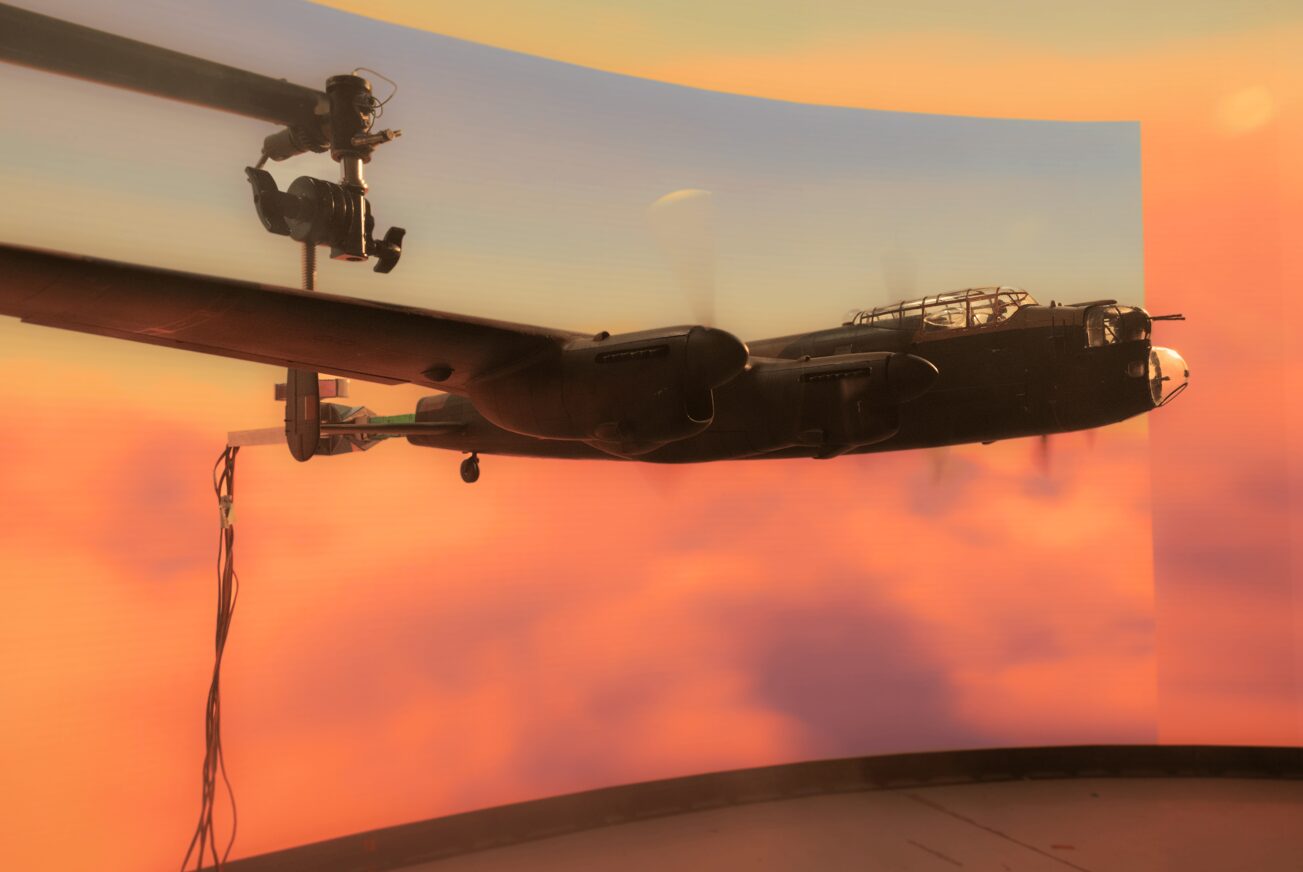
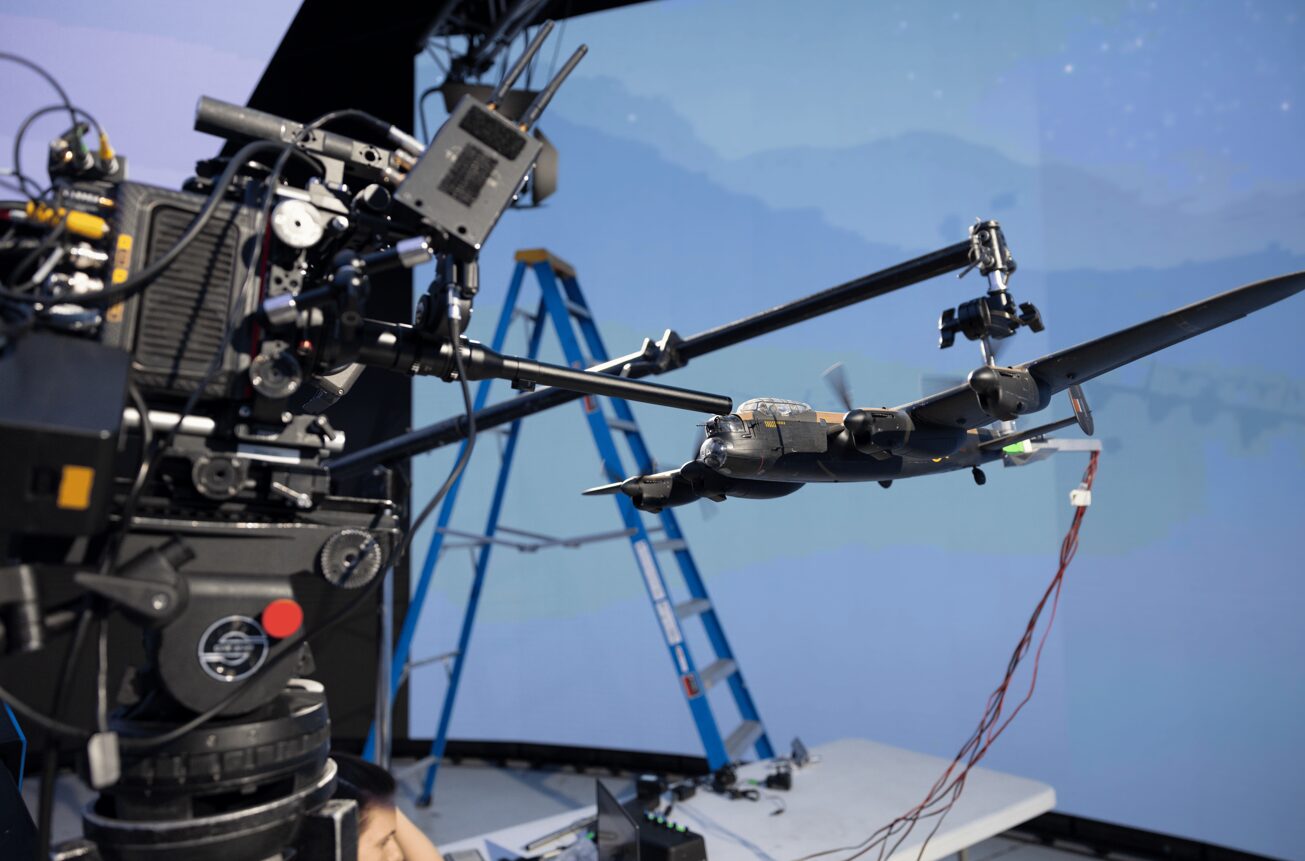
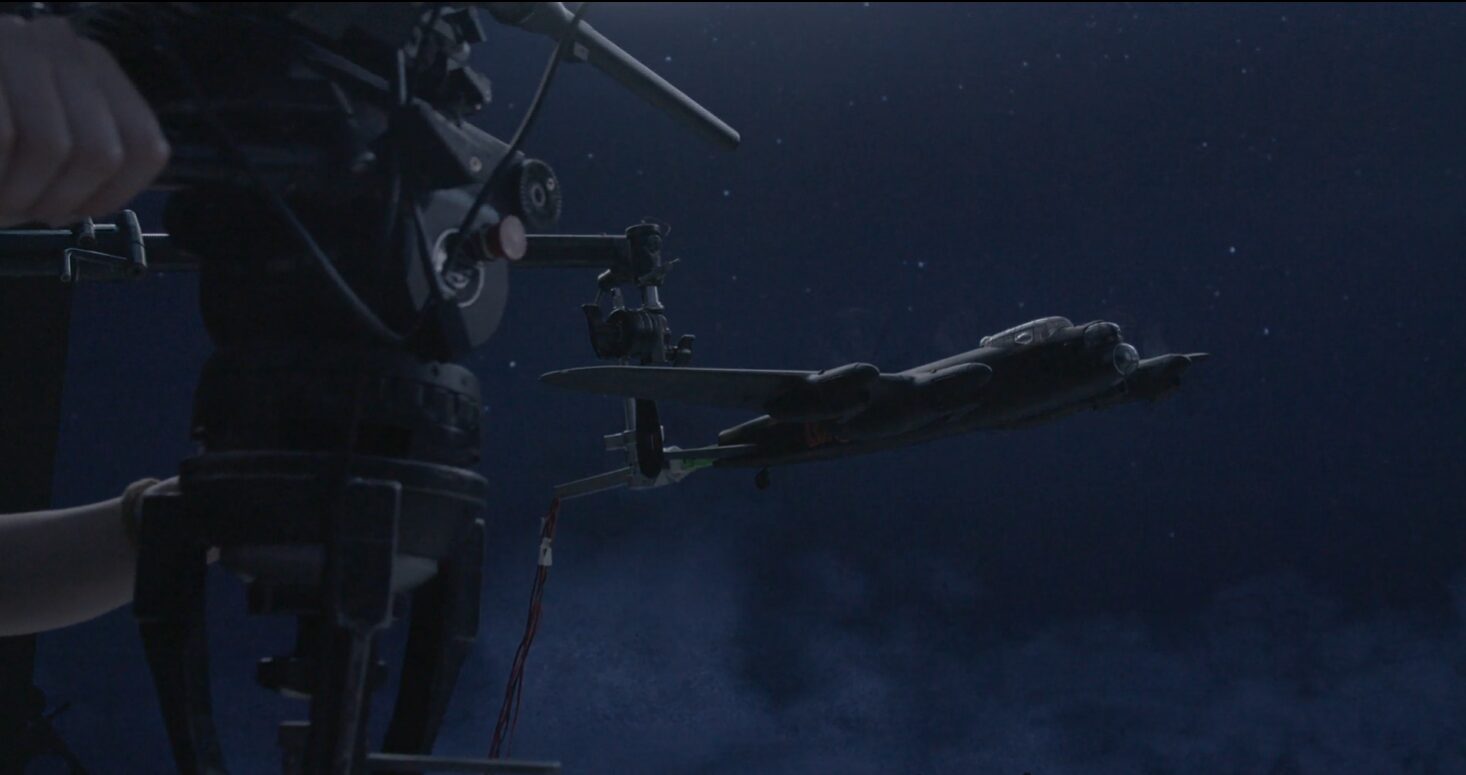
To find out what was possible, the team joined Garden Studios for a day on our permanent LED virtual production stage to test a 1/32 scale miniature with Unreal Engine environments and practical in-camera effects. 

The aim was to test whether virtual production could be a viable solution to film the Lancaster bomber using in-camera visual effects rather than a hefty VFX budget.

Building the sky in real time

Our virtual production team worked in-house to create dusk, dawn and night raid environments in Unreal Engine, including flak effects built using Niagara particle systems. 

The Lancaster formations were developed using Blueprints, with adjustable propeller speeds and subtle camera shake to help the aircraft feel grounded in the scene. 

Rather than moving the camera through a static environment, the team animated the Unreal Engine scene itself, allowing the clouds and landscape to move past the miniature as the aircraft flew in formation. This created a more convincing sense of movement and helped the model feel part of a larger world. 

The team also tested pre-rendered VFX plates through Pixera, comparing the approach with real-time environments to understand the creative options available for the feature. 

Combining practical effects with virtual production

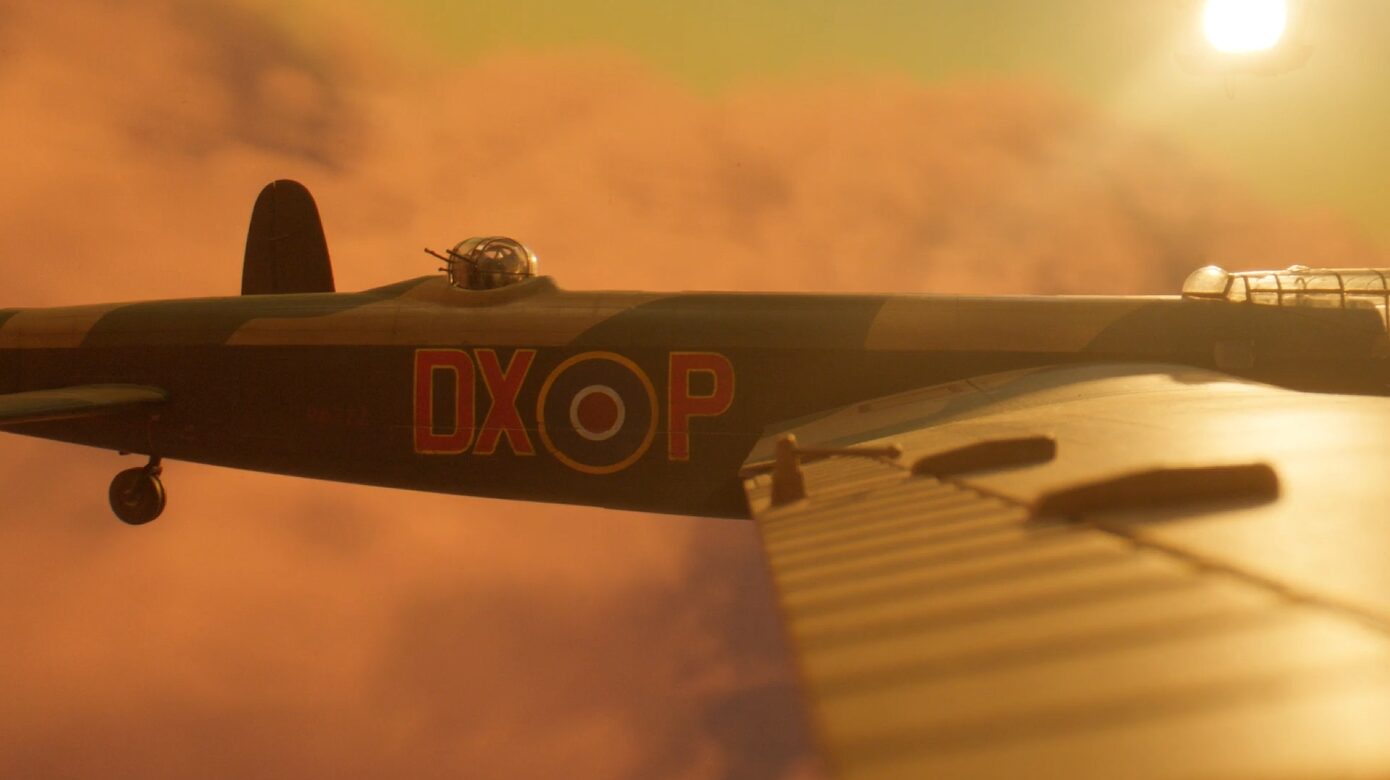
Getting the miniature to feel like a full-size aircraft meant paying close attention to lighting, movement and scale. 

The team positioned the model close to camera, with the ceiling panels brought down low to act as a large light source above the aircraft. This helped recreate the changing light of the sky across the Lancaster’s upper surfaces, cockpit glass and nose blister, capturing reflections in-camera rather than relying on additional post-production work. 

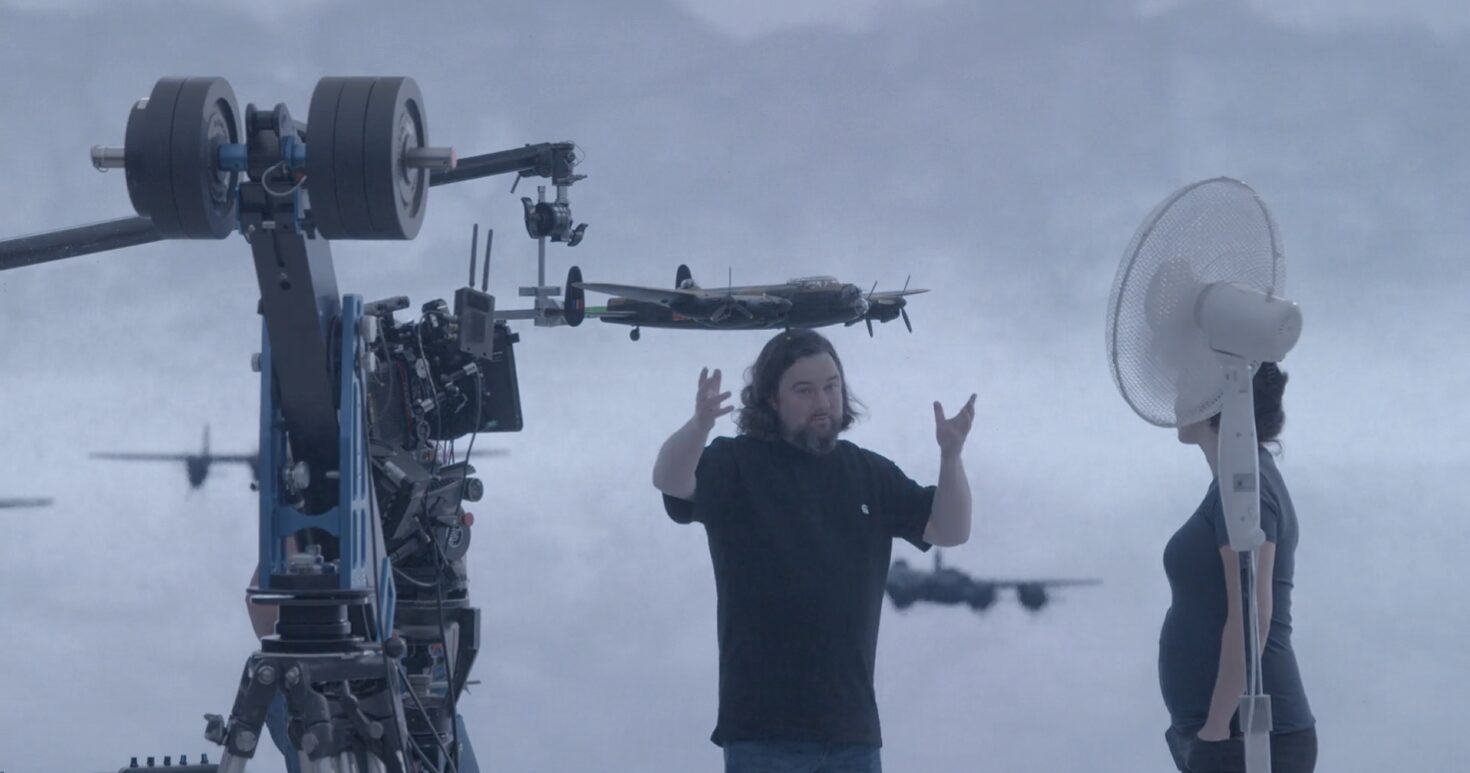
The miniature was mounted on a mega boom, allowing the team to explore slow, heavy movements that better reflected the weight of a full-size bomber. 

An ARRI Alexa Mini, Zeiss CP.2 lenses and a Laowa 24mm probe lens were used to capture the detail, while Mo-Sys StarTracker Max maintained accurate background parallax as the camera moved. 

Practical smoke and haze were introduced directly onto the stage, while DMX-triggered lighting and effects within the LED wall recreated the flashes of tracer fire and flak. The miniature’s working propellers also helped it sit naturally within the atmospheric environment. 

By bringing the environment, lighting and practical effects together on stage, the team could see how different elements interacted in-camera and identify where further VFX work would be needed.
Lighting a night raid

One of the biggest challenges was balancing the lighting requirements of the miniature with the darkness of a night raid. 

Because the entire aircraft needed to remain sharp, the camera had to use a smaller aperture, requiring more light to maintain exposure. While this worked well for the dusk and dawn sequences, recreating a convincing night environment presented a different challenge. 

Running the LED wall too dimly can reduce tonal detail and introduce visible artefacts on camera. Instead, the team kept the wall operating within a healthier brightness range, exposed the image slightly brighter and brought the night look down in the grade. 

The grade was adjusted using Livegrade in real-time so the team could see the intended night-time look on the monitors while maintaining the exposure needed to capture the miniature.

Bringing the creative vision to life

The entire test was completed in one day, with Sam Kemp, VP Supervisor; Nelly Atsmon, Unreal Operator and James Furr, Virtual Production Technician, working alongside A Memory Owed’s Martin (Director), Zoe (Producer) and Amy H C Wilson as Cinematographer

The test highlighted the importance of pre-production planning. We were able to conclude that the feature will require a larger miniature, potentially around 1/5 scale, higher-resolution environments and dedicated motion control to improve the results. The team will also need to determine which sequences are best achieved in-camera and which would benefit from a combination of green screen and VFX. 

This is where virtual production testing can make a real difference: helping filmmakers explore creative options, understand technical limitations and make more informed decisions before committing to a full production. 

For Martin, the value went beyond the technical results: 

Martin Hemingway-Moseley
Director, 'A Memory Owed'
There was an element of emotion that you could feel by seeing the environment in a live setting.

For a story about young men flying over enemy territory with terrible odds of returning home, that emotional connection was important. Seeing the aircraft within its environment helped the team understand how the technology could support the drama and atmosphere of the film, not just the practical solutions.

Explore what's possible with virtual production at Garden Studios

From real-time Unreal Engine environments to practical effects and in-camera experimentation, this test demonstrated how virtual production can help filmmakers explore ambitious creative ideas while making informed decisions about budget, workflow and post-production.

At Garden Studios, our virtual production team works with productions to test approaches, solve technical challenges and identify opportunities to bring more of the creative vision into camera.

Planning a production involving miniatures, aircraft, complex environments or ambitious visual effects? Speak to our team early in the process to explore how virtual production could work for your project.

Contact us

Credits

Martin Hemingway-Moseley – Writer, Director, Producer
Zoe Lewin – Writer, Producer

DP: Sam Kemp 

Virtual Production: Garden Studios (Sam Kemp, VP Supervisor; Nelly Atsmon, Unreal Operator; James Furr, Virtual Production Technician, Elena Carciog , Junior Virtual Production Technician; June Tian , Junior Virtual Production Technician)