To VP or not to VP?

Posted: 16 Apr 2026
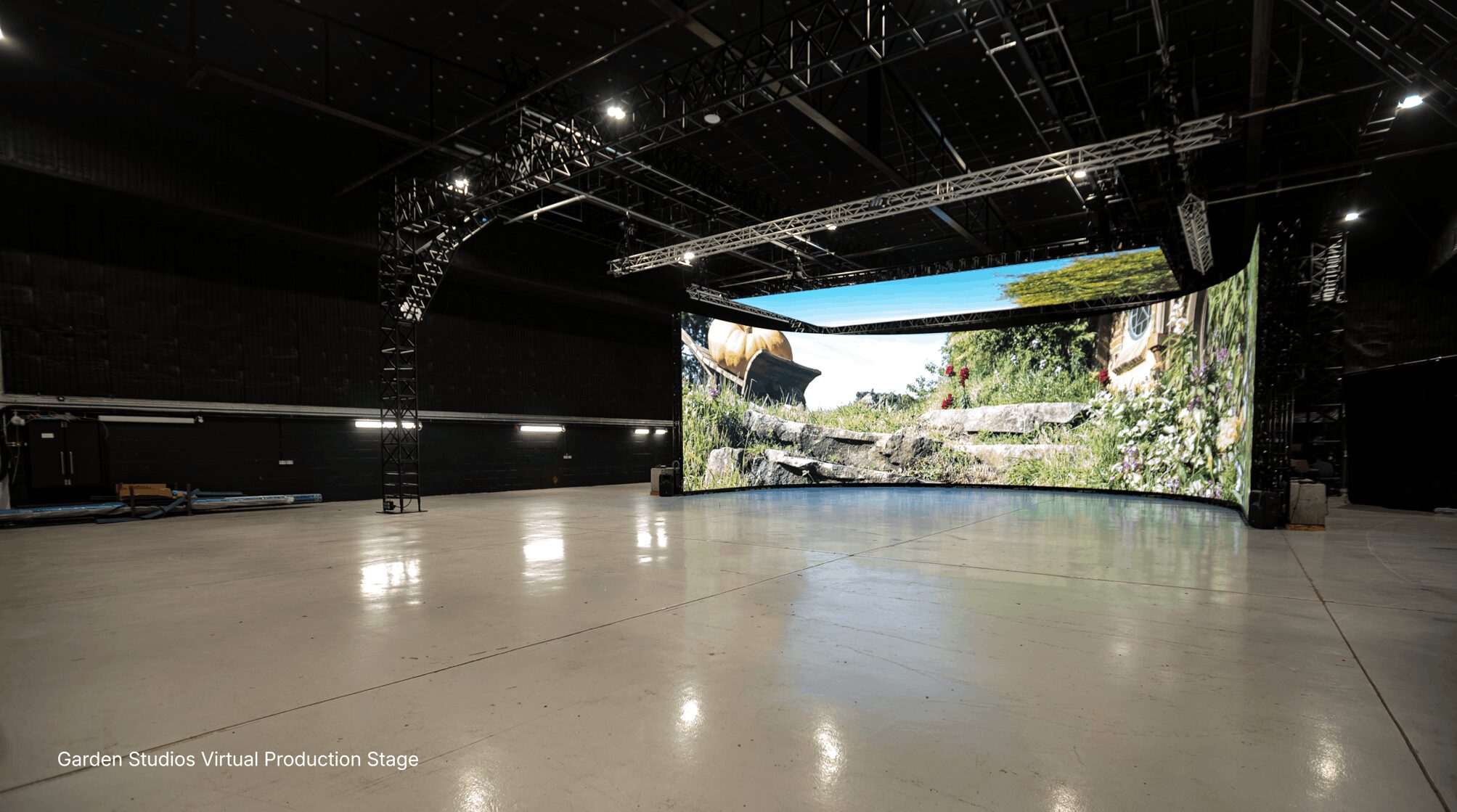
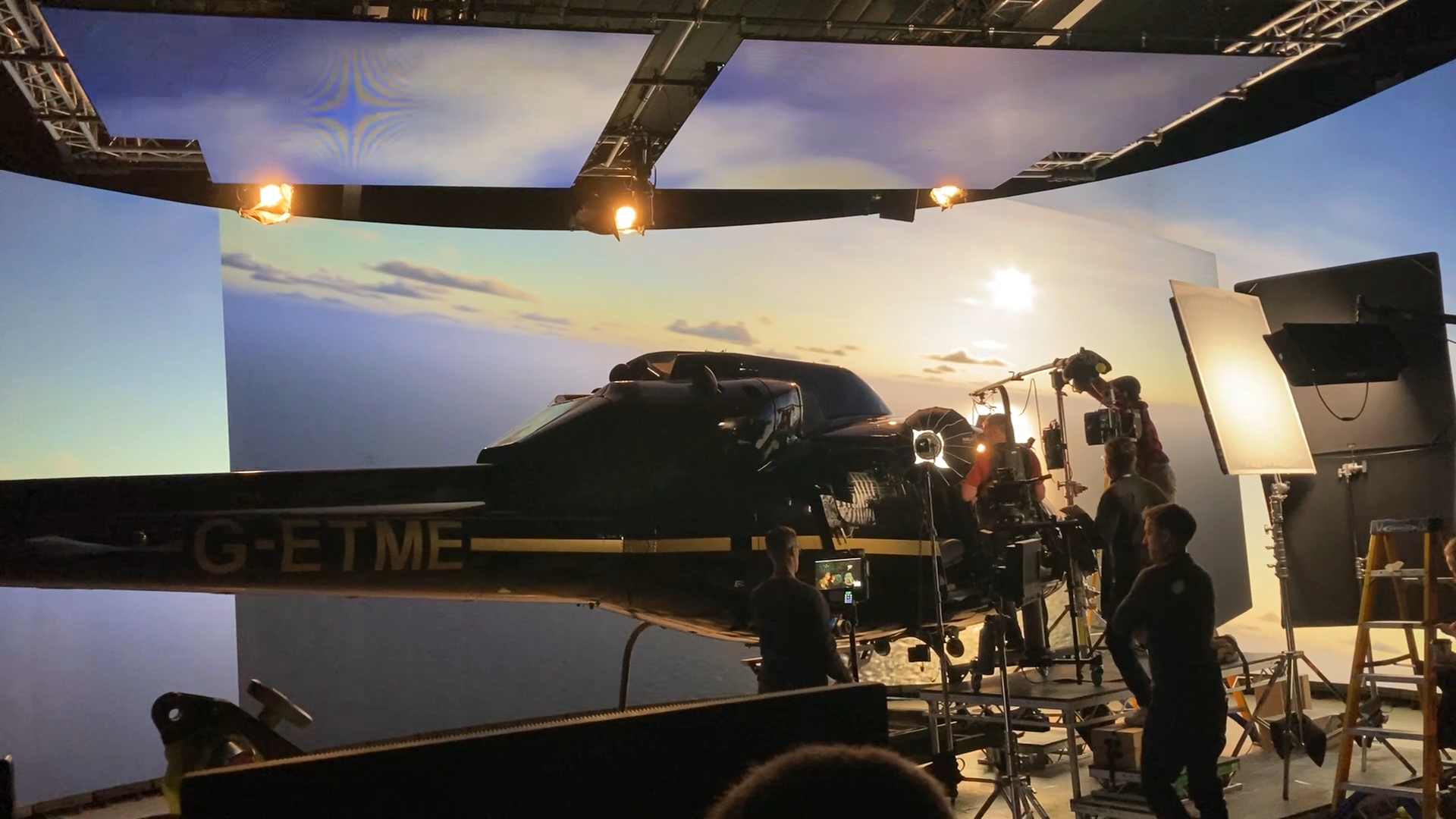
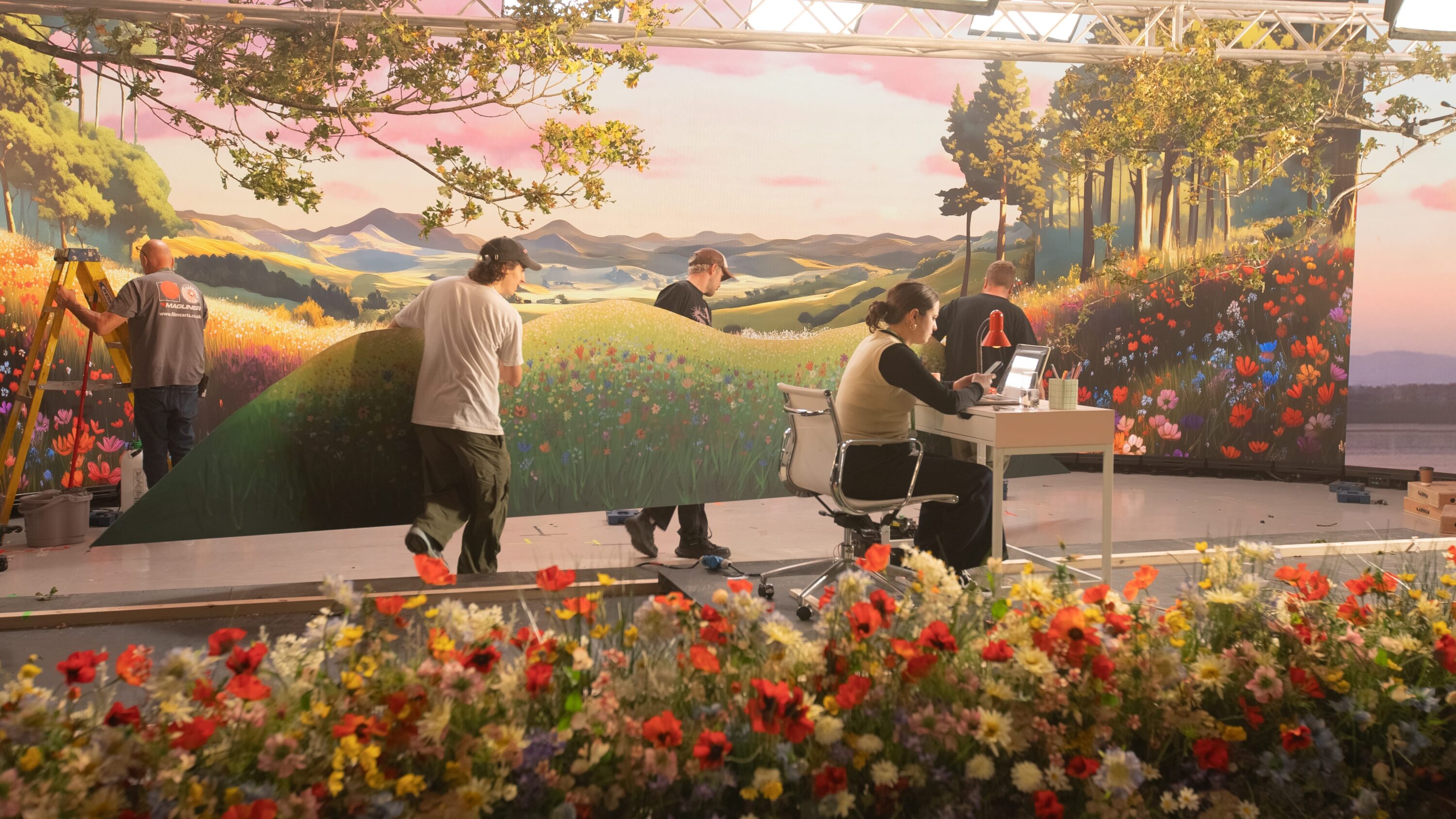
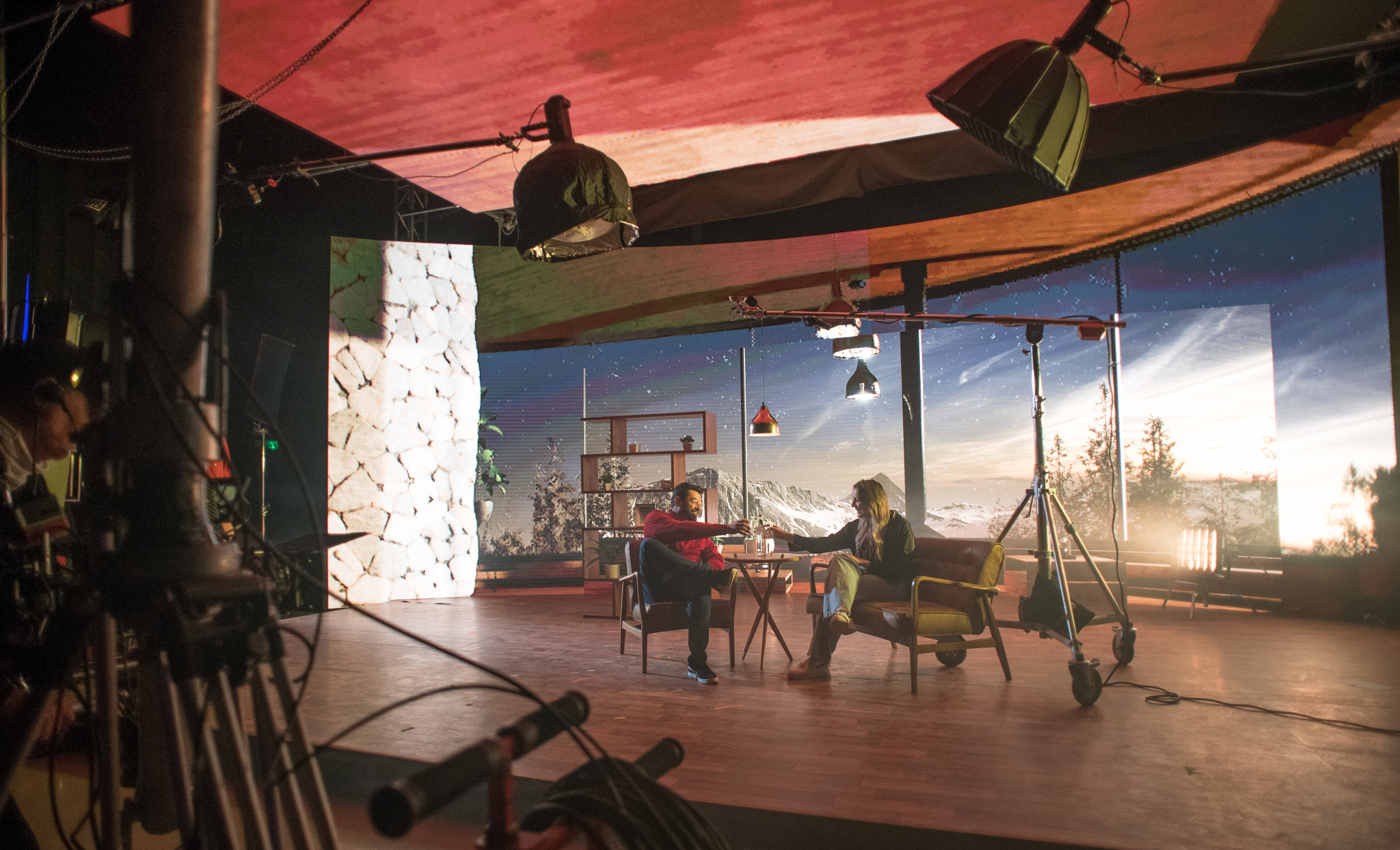
Virtual Production Stage Garden Studios

As the adoption of Virtual Production (VP) picks up speed, we have taken a closer look at its environmental benefits and impact. Over the past few years, a handful of studies have compared VP with traditional studio and location production. In this article, we summarise the findings from those studies, our own experiences in having run a VP stage in central London for five years and evaluate the environmental pros and cons of VP.  

Industry sustainability standard, albert, has recently released an industry report, Accelerate, that concluded that as much as 65% of film production emissions is generated by travel, with 30% generated by flights. To address these emissions, albert recommends moving more film production to VP stages.  

Studies by Ulster UniversityInterreg  EuropeFilmakademie Baden-Württemberg GmbHUCLA and ICF/Sony (and later revisionshow that the carbon reduction potential of VP goes beyond travel and that emissions can be as much as 20-76% lower than traditional offline production. The range is large, and there are many variables at play, but all reports agree that the reduction is material. 

What are the environmental benefits of VP?

Travel and accommodation 

The reduction in travel, transport and accommodation emissions depends, of course, on the location. A UK-based production filming a car scene in Morocco, for example, would benefit from higher carbon savings at a VP stage than would a driving scene closer to home. Further savings will be achieved, even in the case of a domestic driving scene, if there is no need for hotel accommodation.  


Fewer shooting days 

The studies show that the savings in shooting days offered by VP often represent the largest carbon saving opportunity, typically resulting in between 20-30% less energy use. Hard to control elements on location shoots, such as weather and light conditions, can easily be managed on a VP stage. Night scenes can be filmed in the daytime, and day scenes during hours of darkness. Furthermore, scenes can be quickly changed, saving further time.  


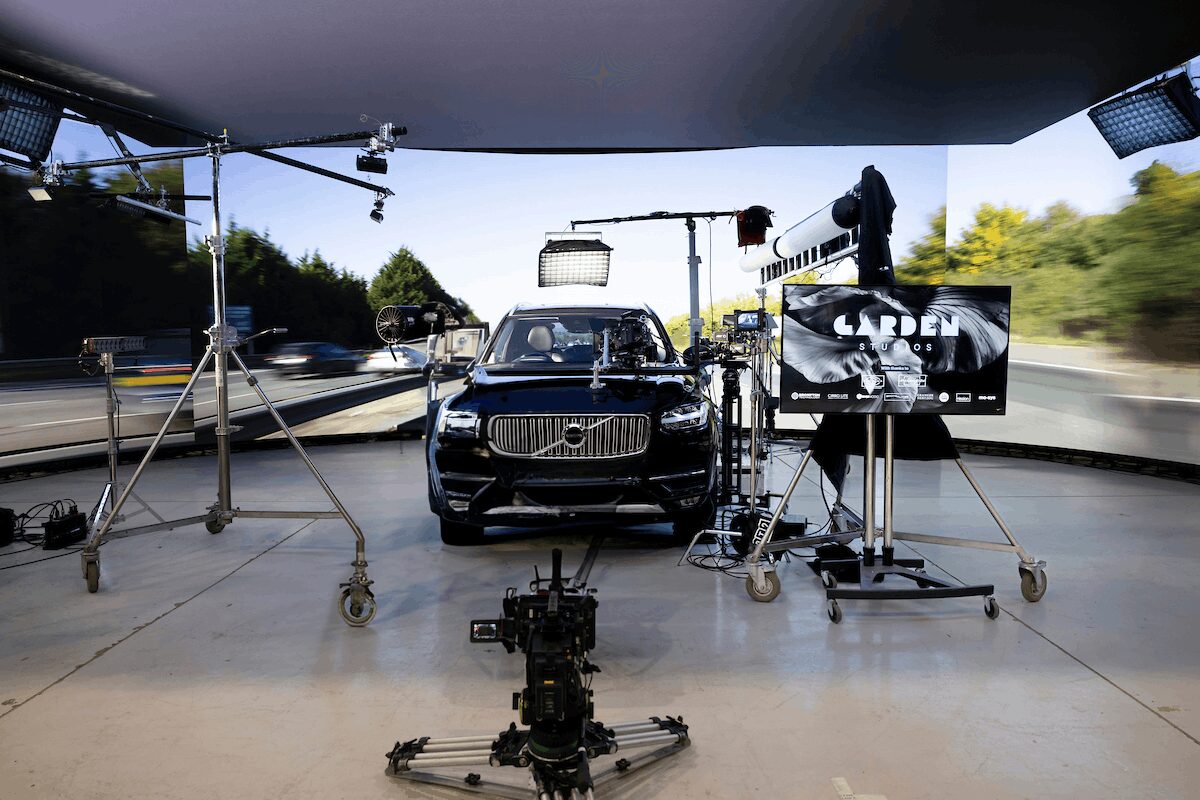
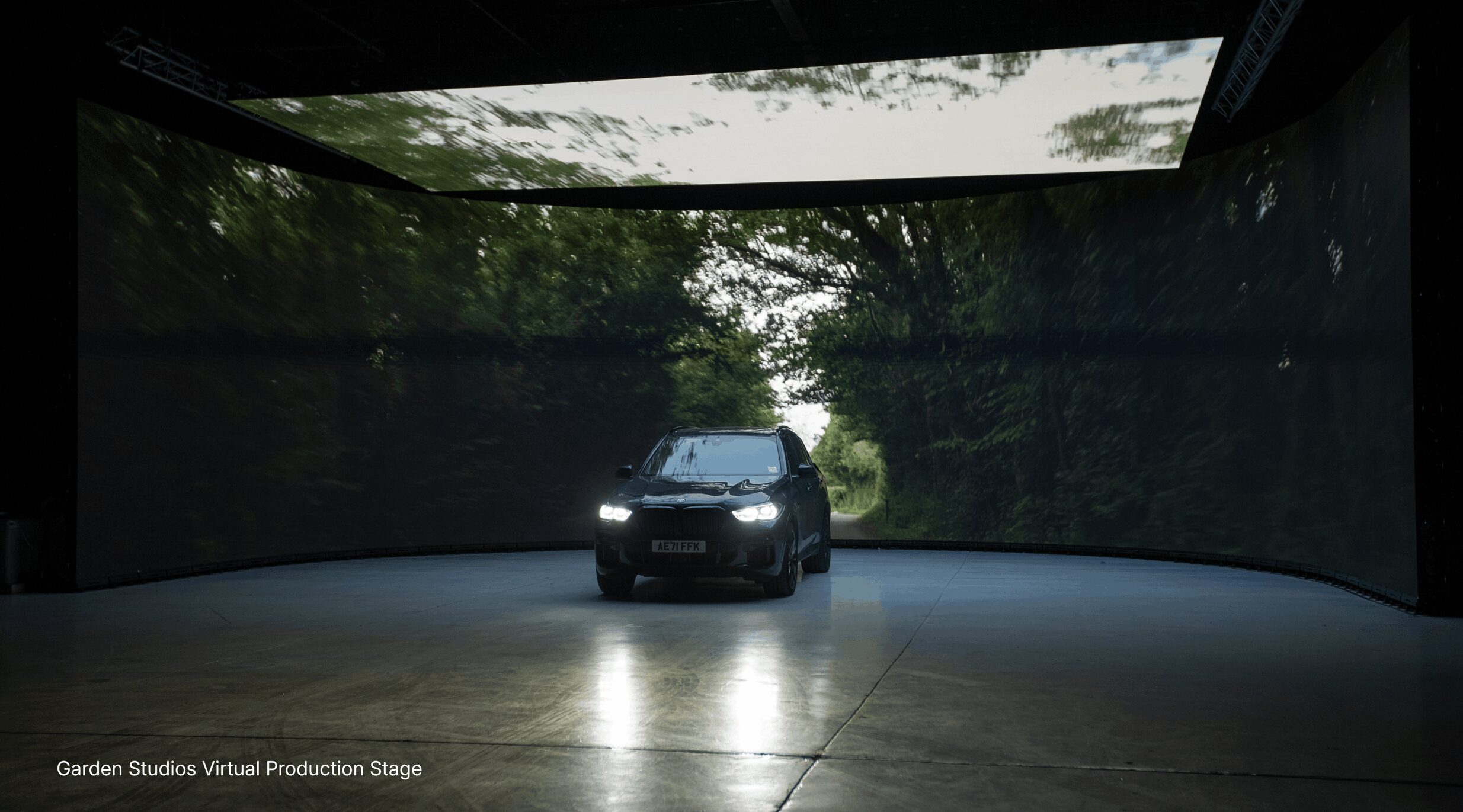
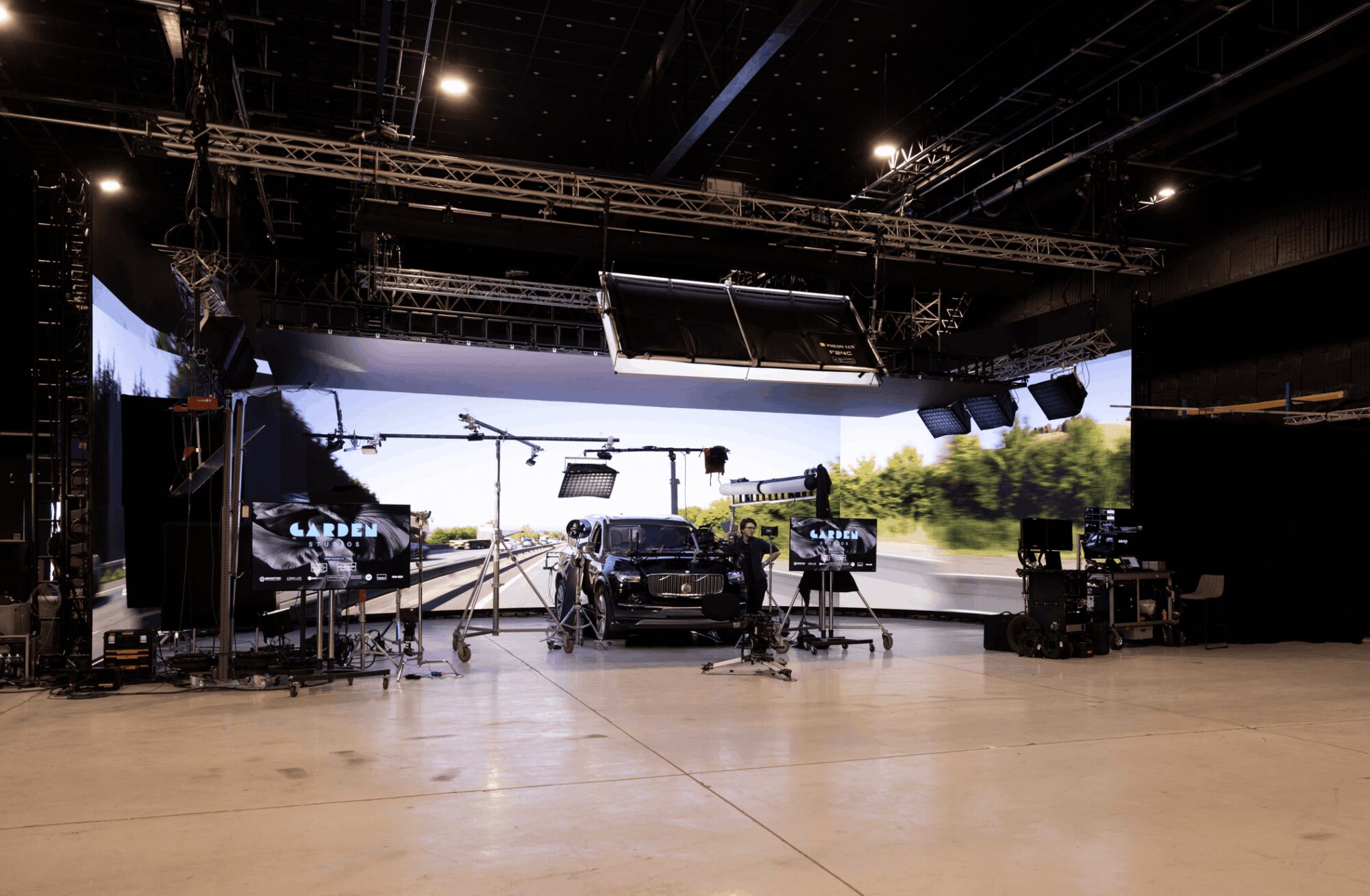
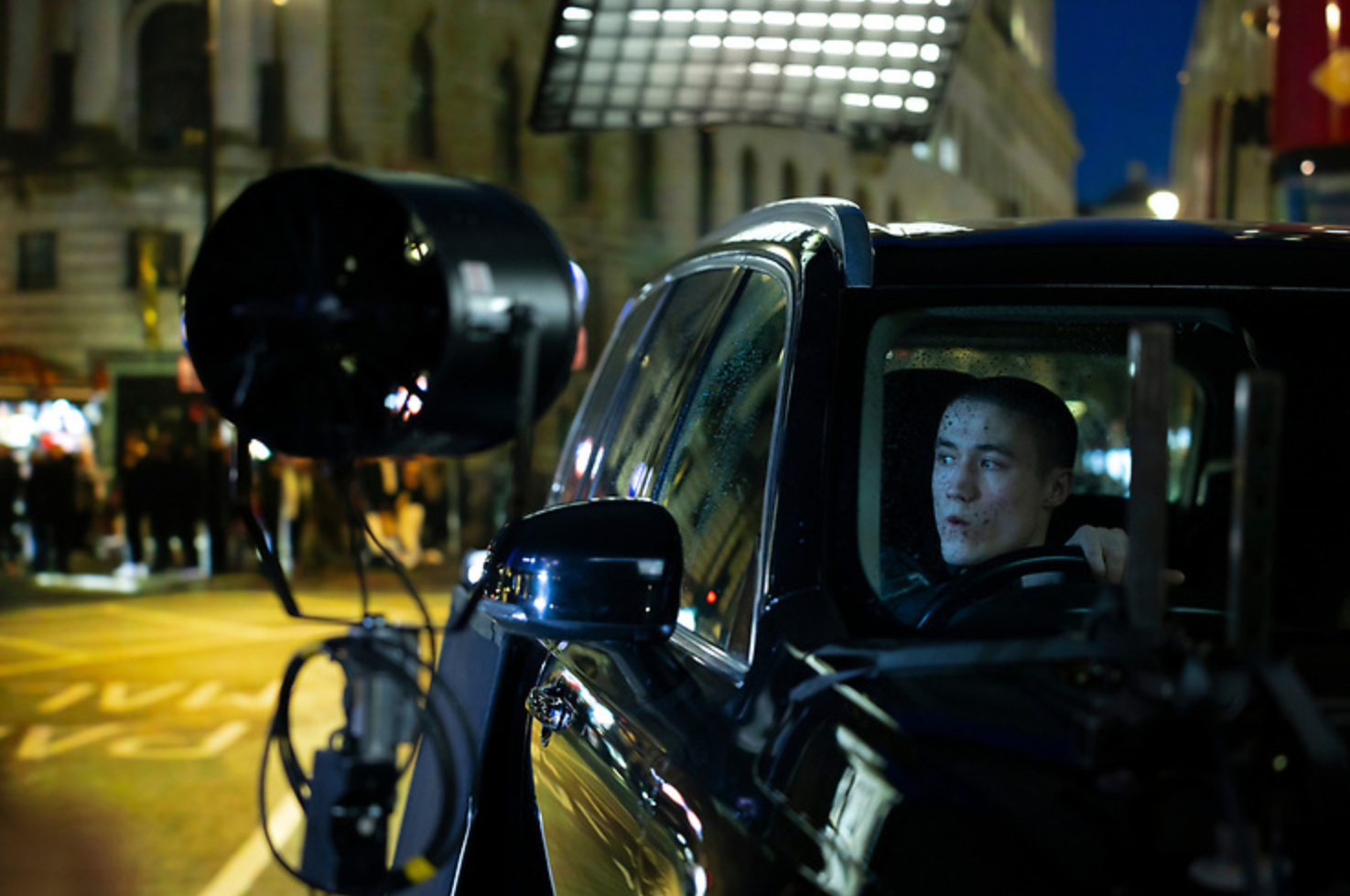
Since Garden Studios opened in 2021, we have noticed a steady increase in productions using our VP stage for driving scenes. There are obvious benefits to this that goes beyond carbon savings, particularly in obtaining planning permissions, crowd management in busy city centres, safety, confidentiality, etc.  


Availability of renewable power 

The sustainability of a VP shoot versus a location shoot will depend on the availability of renewable power. Whereas renewable grid power, which we provide to all our clients at Garden Studios, can be used at a VP stage, the sustainability of a location shoot will depend on access to sustainable generators. Although HVO fuelled generators are   

becoming more mainstream, HVO fuels remain controversial, with large volumes of HVO being fraudulently labelled as sustainable. Battery-powered options are still relatively rare and will only be as sustainable as the source that charges them.  
Fewer post-production days 

In contrast to traditional film production, VP allows the director to work in real time to visualise and refine the final image. This leads to fewer re-shoots and less time in post-production, which in turn further reduces the energy use from heating/cooling post-production facilities and powering editing equipment. Furthermore, the interactive creative process made possible by VP can represent significant time savings. A well-planned production is key to unlocking these benefits.  


Reduction of set material and prop waste 

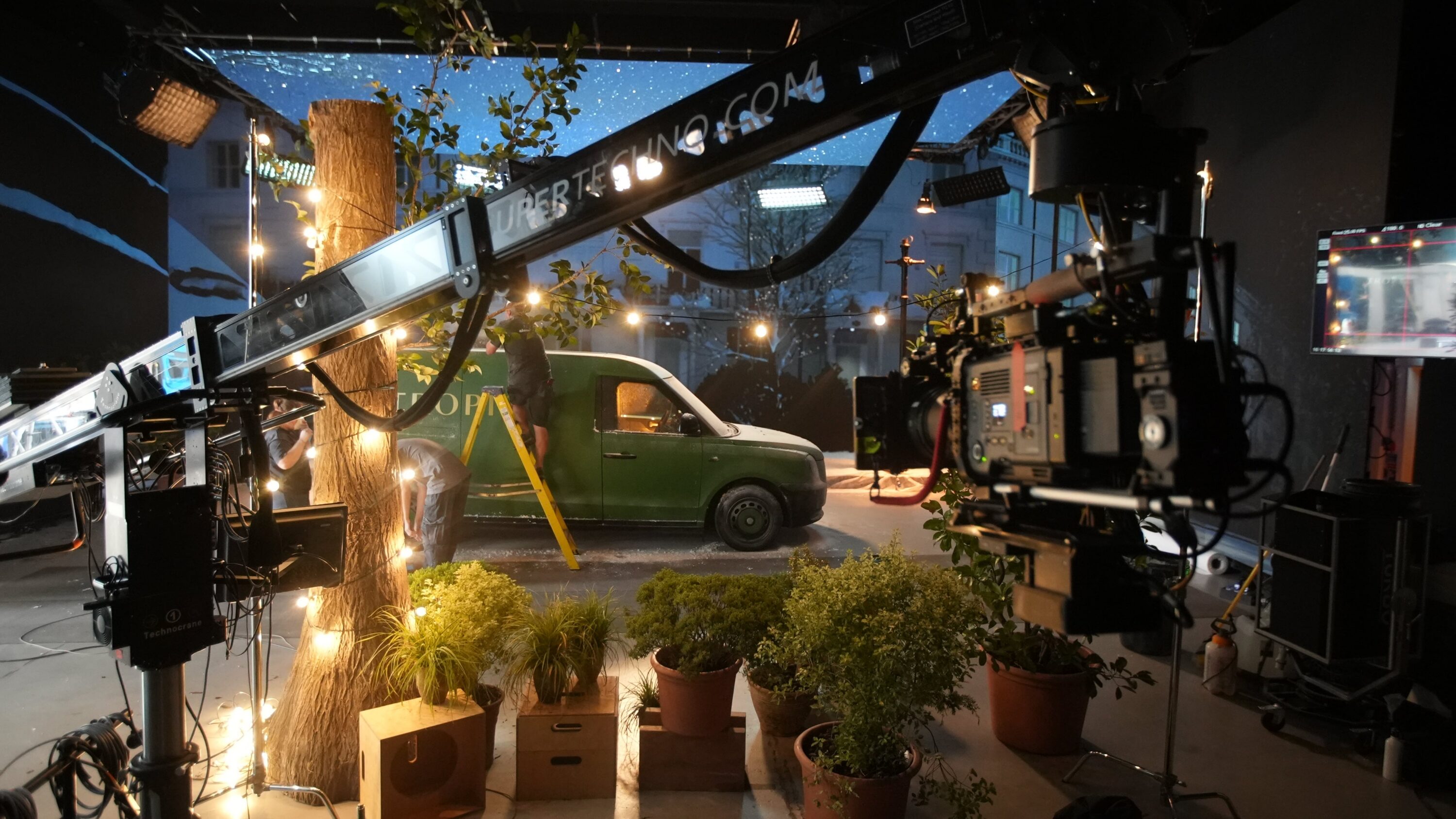
Digital renditions of sets eliminate or drastically reduce the need for physical assets, lowering carbon emissions involved in the acquisition of props and set material, the building of sets and their disposal at strike. In particular, the use of plywood with a high carbon footprint, often sourced from rainforests in Southeast Asia and transported long distances, is extensive in set builds. VP eliminates or drastically reduces the need for physical sets and props, which further adds to this production method’s carbon efficiency.  


Less wear on fragile ecosystems and heritage sites 

Filming in sensitive ecosystems or on heritage sites is known to have a significant environmental impact. As outlined in the BAFTA biodiversity guide, productions can damage or disturb habitats and species through noise, lighting, and access. There are numerous well-publicised examples of this, including the filming of Mad Max in Namibia and The Beach in Thailand. Apart from the photography of plates to be used on the VP wall, a VP shoot avoids impact on the actual location while still providing the appearance of the desired location.  

And the downsides?

Although VP has been proven to represent material carbon saving opportunities, it’s important to know that not all aspects of the process are fully understood. The environmental impact of manufacturing the VP equipment has not been quantified, i.e. the mining of rare earths and metals, the production process, transportation to the end user and disposal. Another unknown is the energy consumption associated with data storage, rendering and cloud computing (if used) involved in the VP process

The life span of the equipment will also be important in assessing the environmental benefits. The modular design of the LED panels is a significant positive, as individual panels can easily be replaced should they fail. The LEDs have a long lifetime, and the panels can typically be repaired at the individual LED level, but in practice, the lifetime is determined by how long manufacturers are prepared to support older models as they release newer, improved ones.  

During the five years that we have now been running the Garden Studios LED volume, we have made multiple upgrades to the computer equipment producing the images, but the LED panels we purchased five years ago are still available to purchase new, and we have seen no detectable degradation of image. This concurs with studies which estimate a useful lifetime of about 10 years for LED panels, with the potential for downstream second-life re-use. Over the same five years, we have seen manufacturers release new, improved LED panels with higher refresh rates and finer pixel pitches, improved mechanical design, lower weight and other incremental improvements, but our original panels are still relevant, and we expect them to remain so for several years. 

What’s next for VP and sustainability?

Given the many variables in film production, a pre-production VP carbon calculator allowing for a comparison between producing on a VP stage with traditional methods would be helpful in determining the environmental benefits of any given production/scene. A modified version of already existing industry carbon calculators, such as albert’s could be a good starting point.  

A library of digital assets would facilitate sharing and reduce the impact of energy-hungry processes to create these assets. Ideally, a Life Cycle Analysis of VP equipment should be undertaken to get an understanding of the full impact. More openness from equipment manufacturers to share carbon impact data of the manufacturing process would be beneficial. 

We welcome the growing interest in VP and the potential for environmental benefits this production method offers. More investigation is needed, but the studies are clear: the benefits are there and go beyond the carbon savings potential. We look forward to taking part in future studies and sharing data and our experiences with anyone interested in digging deeper into this topic. 

Our ‘Most Advanced’ Virtual Production Stage

With the launch of our new Virtual Production Stage, Garden Studios continues to strengthen its position as a leading UK hub for virtual production, combining advanced facilities with studio-scale support for productions of all sizes.

The facility features a 7,815 sqft blacked out and sound-treated dedicated virtual production stage with a 24m x 5m LED wall and 10m x 5m ceiling panels. We are a “wet hire” facility that includes prep space, green rooms, and parking.

While optimised for driving process work, the stage supports a wide range of Unreal Engine-based real-time workflows. Clients have access to in-house 3D technical art support, alongside the flexibility to work with external partners.
To book a recce and see the new stage in action, get in touch today.

Contact us

Literature:

‘Accelerate’ – BAFTA albert – 2025 

‘Virtual Production’s Role in Carbon Reduction and Net Zero Production in the Screen Industries’, Studio Ulster at Ulster University.  

‘Virtual Production – a study on its environmental impact’, Green Screen, Interreg Europe 

‘Green Screen, Green Pixels and Green Shooting’, Filmakademie Baden-Württemberg GmbH  

‘Comparison of GHG Emissions from Scenes of On-Location and Virtual Productions’, ICF and ‘Revised Analysis Comparing GHG Emissions from Scenes of On-Location and Virtual Productions’, ICF 

‘Virtual vs Conventional Production for Film and Television: A Comparative Life Cycle Assessment’, UCLA